

A study from Iraq’s Kurdistan Region has mapped the toll of autism elopement on families with no safety net — and found that the most powerful protection a child has is not a GPS tracker but the structure of the household around them.
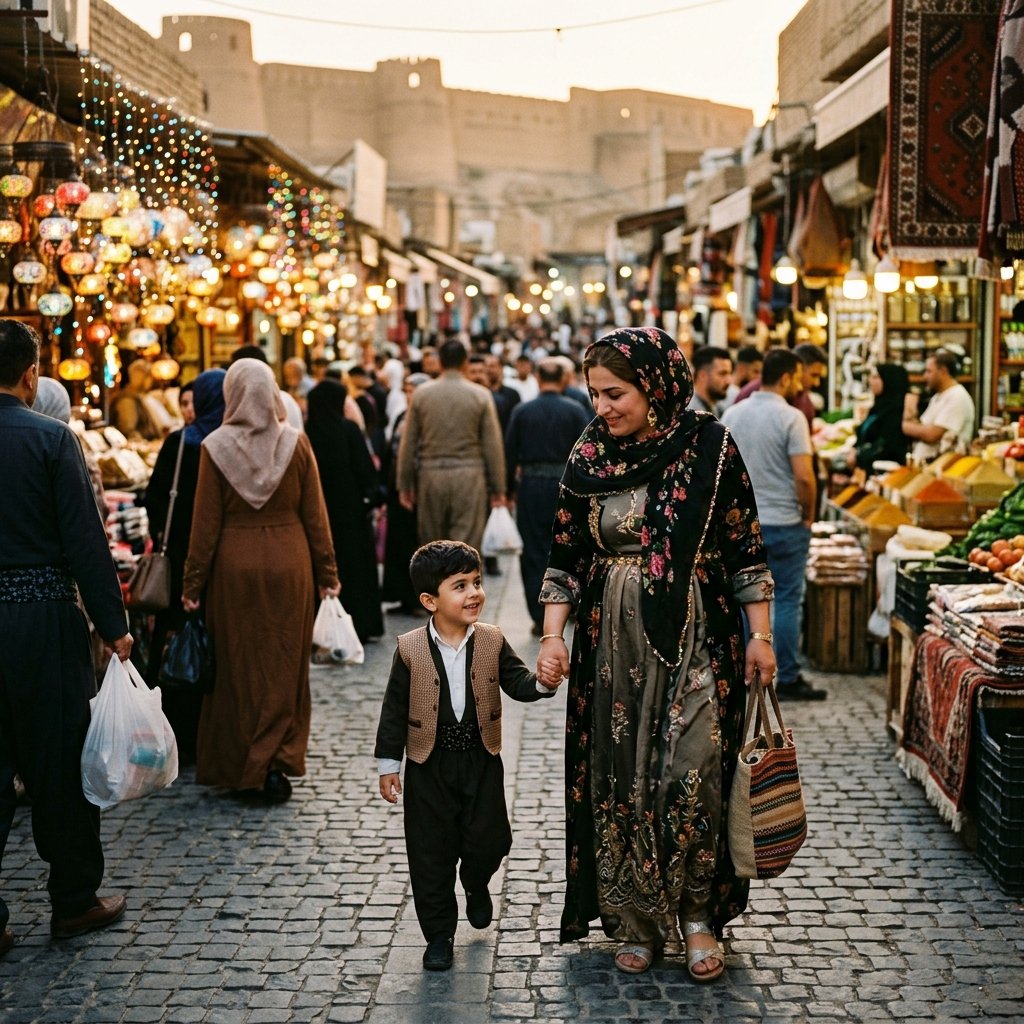
It is late afternoon in Erbil, the capital of the Kurdistan Region of Iraq. A young mother — identified in the research only as M.1 — is walking with her three-year-old son in his stroller. For one second, her attention shifts. In that single tick of the clock, her son spots a shopfront decorated with sparkling, multicoloured lights. He fixates. He giggles. And then, in the words she later used to describe the moment, he “jumped out of the coach nimbly and started running.”
“I felt his behaviour paralyse me,” she recalled.
For parents of children with autism who elope — the clinical term for when a child runs away, bolts, or wandering from a safe, supervised environment — that paralysis is not dramatic language. It is a precise description of what happens to the body when the mind registers that your child has vanished with singular, terrifying purpose.
What makes M.1’s story the starting point for an important new study is not the elopement itself. It is everything that came after — and everything that was not available to help her.
The Study
Published in the journal Research in Autism in October 2025, “Elopement in Autism: Impacts on Parents in Low-Resource Settings” was conducted by Sayyed Ali Samadi of Ulster University and Hero M. Rashid of Sulaymaniyah, in the Kurdistan Region. The researchers surveyed 101 Kurdish parent pairs whose children attended a daycare centre in Erbil, comparing 35 families who were actively managing elopement with 66 families who were not.
The Kurdistan Region of Iraq is a semi-autonomous territory of approximately five million people. It has zero formal autism support programmes, no municipal rescue networks, and a 45% illiteracy rate among people aged six and older. Families managing a child with autism in this environment have no access to the GPS trackers, smartphone geofencing apps, or remote subscription alarms — costing up to $1,000 annually — that families in Western countries increasingly rely on.
What they do have, in many cases, is each other.
Measuring the Toll: What the Research Found
To measure the psychological and physical impact of managing elopement without institutional support, the researchers used three standardised tools that are widely used in clinical psychology:
The General Health Questionnaire (GHQ-28) screens for psychiatric distress and physical health symptoms — things like sleeplessness, persistent anxiety, and somatic complaints (physical symptoms driven by emotional stress, such as headaches or chest tightness).
The Parenting Stress Index — Short Form (PSI-SF) is a 36-item questionnaire where a score of 90 or above indicates clinical-level parenting stress — meaning stress severe enough to warrant professional attention.
The Parental Satisfaction with Caring for a Child with Developmental Disability Index (PSCDDI) measures how fulfilled and satisfied a parent feels in their caregiving role.
The results, comparing elopement families to non-elopement families, were stark. Parents managing elopement reported a mean PSI-SF score of 123.31 — compared to 116.13 in families not dealing with elopement. They also reported dramatically lower satisfaction in their caregiving role: a mean PSCDDI score of 38.77, against 31.80 in the reference group.
But the most important discovery was something the researchers called an “autonomic loop” — a phrase that deserves unpacking, because it describes something many parents will recognise even if they have never had a name for it.
In families not dealing with elopement, there was no statistical relationship between a parent’s general physical health and their parenting stress. The two things were independent of each other. But in elopement families, the researchers found a strong and direct correlation: the worse a parent’s physical health, the higher their parenting stress — and vice versa (r = 0.480 for stress; r = -0.246 for caregiving satisfaction). The two had become locked together, feeding each other in a cycle.
What this means in plain terms is this: elopement does not simply add stress to a parent’s life. Over time, the constant, exhausting hypervigilance required to prevent a child from running away physically degrades the parent’s health — and that declining health then amplifies the stress further. The mind and body stop operating independently. They spiral together.
The Most Powerful Safety Tool Is Not a Device
This is where the study delivers its most important finding — one that applies to families everywhere, not just those in low-resource settings.
Using a statistical method called Binomial Logistic Regression — a technique that calculates the mathematical odds of an outcome based on multiple variables simultaneously — the researchers mapped which factors most powerfully predicted whether a child would elope. The results are presented below.
What Increases and Decreases the Odds of Elopement
| Factor Analysed | What It Means | Odds Ratio | Plain-Language Impact |
|---|---|---|---|
| Autism severity score | How severe the child’s autism diagnosis is | 1.27 | Each unit increase in severity raises elopement probability by 27% |
| Child’s age | How old the child is | 0.89 | Each additional year of age reduces elopement likelihood by 11% |
| Relatives living nearby | Whether extended family lives close | 0.91 | Having nearby relatives reduces elopement probability by 9% |
| Number of family members in the home | How many people live in the household | 0.82 | Each additional family member reduces elopement odds by 18% |
*Model statistically significant at χ²(11) = 74.45, p < .0005, explaining 93% of elopement variance and correctly classifying 89% of cases.
Read those last two rows carefully. Every additional person living in the household reduces the odds of elopement by 18%. Every nearby relative — a grandparent, an aunt, a cousin living down the street — reduces the risk by a further 9%.
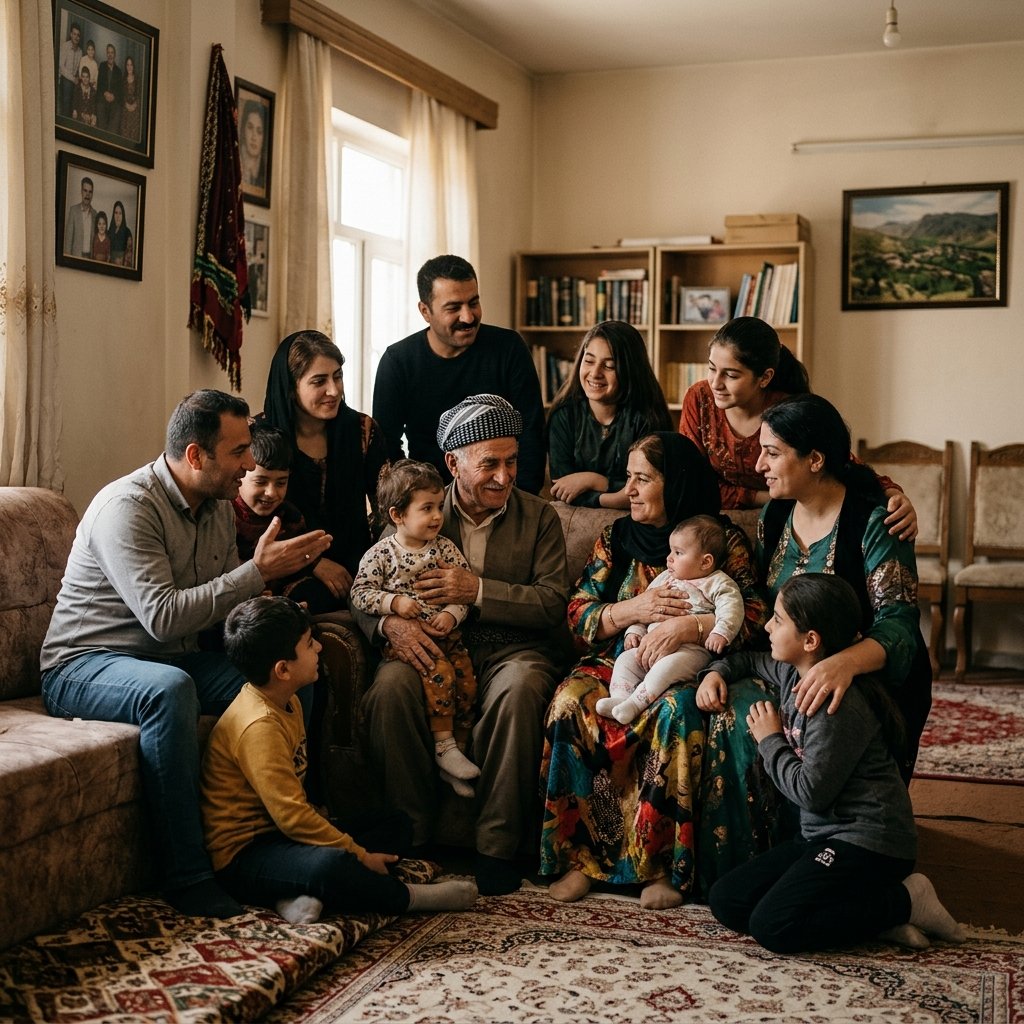
In Kurdistan, extended family networks function as what the researchers describe as an “informal, distributed surveillance system.” Grandparents. Aunts. Neighbours who have known the family for years. People who notice immediately when something is wrong, who know the child, who can act without needing to be briefed. When that network is absent — when a single exhausted mother carries the entire burden alone — the safety net collapses.
The technology gap between Erbil and New York is enormous. The human insight is universal.
“He Is Discovering the World”: The Cultural Paradox
The qualitative interviews — meaning the open conversations the researchers had with parents, as distinct from the numerical survey data — revealed something that challenges the way elopement is typically framed in clinical settings.
In Western medicine and therapy, elopement is almost always treated as a dangerous symptom to be eliminated. But 54% of the Kurdish parents interviewed initially described their child’s wandering in a different light entirely — as a sign of curiosity, cognitive growth, and a desire to connect with the world.
Father F.4 put it directly: “Runaway or wandering is not a fair label; he is doing this to discover the world around him in a special way.”
Father F.6 recalled: “I discovered that this is something that she is doing deliberately and on purpose. Therefore, I felt a bit happy that she is developing socially and wants to discover the world around her… Although it is not a safe habit.”
This is not denial. These parents understood the danger. But they also held space for their child’s inner world — for the fascination with sparkling lights, for the compulsion toward movement and discovery — alongside the fear.
What crushes this internal acceptance is external judgment. Because the Kurdistan Region has almost no public awareness of autism or neurodiversity, mothers whose children bolt in public face immediate, public humiliation. They carry what the researchers describe using a culturally specific term: “tawanbariya dê û bavan” — a deeply ingrained sense of maternal guilt, amplified by the cold gaze of bystanders who interpret a neurological compulsion as a failure of parenting.
Father F.7 described the moment his son ran out of an unlocked door while he was away: “He wanted to cross the street, and the shopkeeper next to our house kept him and called me to come back. He said, ‘Why are you not taking care of him the way it should be?'”
Mother M.12 described the isolation this creates: “If I tell someone else about this problem, he may think that I am a careless parent, but I did not know. Why did it happen if I closed my eyes for a minute or two? There are many times when it may happen in the blink of an eye.”
Any parent who has experienced elopement — in any country, in any language — will recognise that sentence.
Building Your Safety Circle: A Zero-Cost Guide
The research from Kurdistan, combined with interaction design principles developed by Elizabeth Sloan of Iowa State University in her 2026 design thesis “Supporting High-Stress Decision-Making in Elopement Events,” points toward a practical, community-based safety framework that any family can build — regardless of whether they have access to expensive tracking technology.
Step 1: Map Your Community Eyes — The Erbil Method
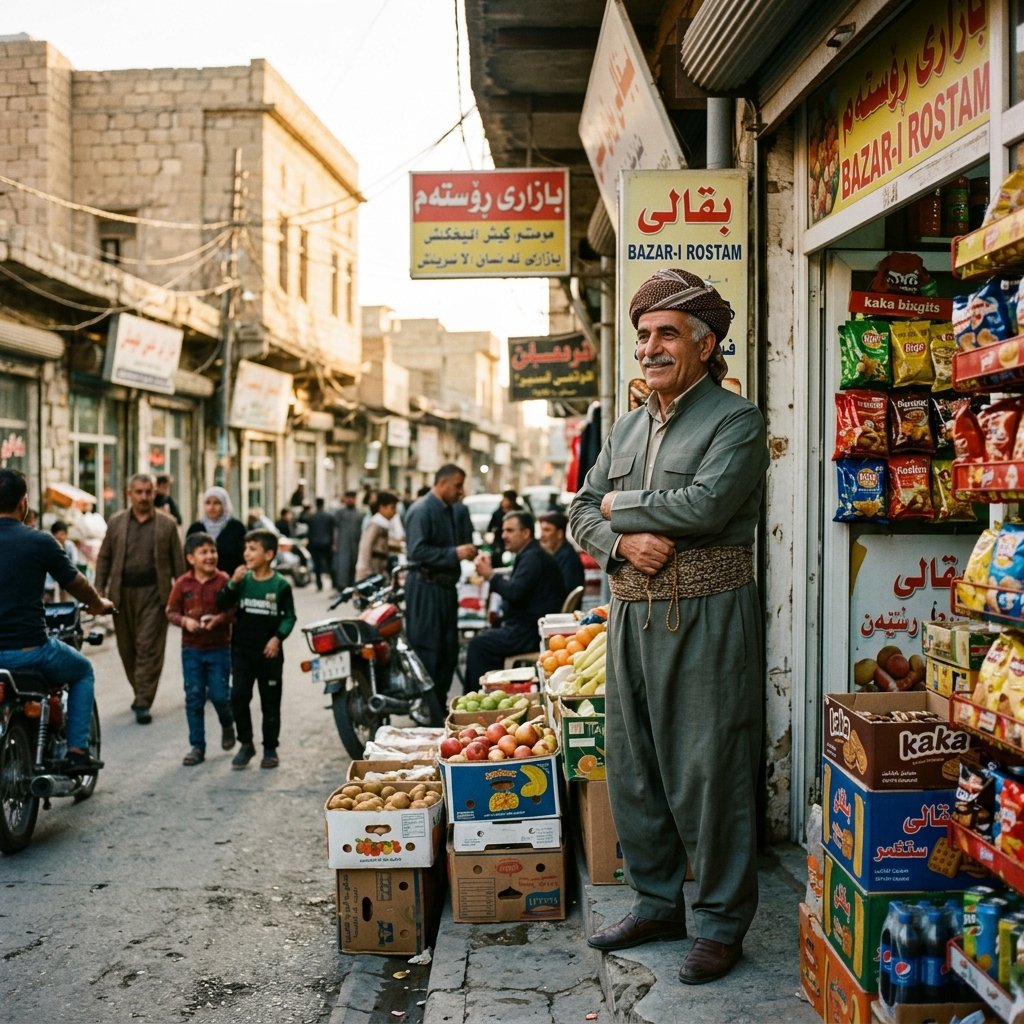
Do not try to manage safety alone. Formally enlist at least three local people — a nearby shopkeeper, a neighbour, and a school staff member — as your designated safety eyes. These are people who know your child by sight, know what elopement looks like for your specific child, and know to act immediately.
Create a pre-written, single-sentence emergency message you can send instantly: “Missing: [Name], Age [X], wearing [Colour]. Drawn to [water/lights/specific location]. Please search [specific area].” Do not rely on a complex group message during a panic. Have the message ready before it is ever needed.
Step 2: Define Roles, Not Boundaries
Research by Sloan found that during actual elopement events, panicked caregivers consistently misunderstand “safety circle” as a geographic boundary — a radius on a map — rather than a network of people with specific jobs. Before anything happens, tell each person in your network exactly where they should physically search if your child goes missing. Assign zones. Assign roles. Practise it once, calmly, before it is an emergency.
Step 3: Designate a Home Base Liaison
Sloan’s research identified a critical gap in how families coordinate during elopement events: the moment a parent finds their child, they drop the phone. They stop responding to messages. Searchers who were helping have no way of knowing the child has been found — and may continue searching, or worse, call emergency services unnecessarily.
Designate one person — a neighbour, a relative, a trusted friend — whose sole role during an elopement event is to stay at home base, manage communication with the search network, and make the calls to stand everyone down the moment you physically have your child back.
What This Study Is Really Saying
The families of Erbil are managing one of the most frightening aspects of profound autism without any of the institutional support that families in wealthier countries take for granted. They are doing it largely through the density of human connection around them — grandparents, aunts, neighbours, the shopkeeper who knows the child’s face.
The mathematics of the study make the lesson precise: every additional person in a household reduces elopement odds by 18%. Every nearby relative reduces them by a further 9%. These are not soft, feel-good findings. They are statistically significant numbers from a rigorously designed study.
The most important safety tool available to a child who elopes is not a GPS tracker. It is the number of people around them who know them, love them, and are paying attention.
For families everywhere — in Erbil, in Delhi or Bhopal or Ahmedabad, in any city — that is something worth building deliberately, before the afternoon when attention shifts for one second and a child fixates on the sparkling lights.
This cross-cultural investigation is grounded in empirical research published between October 2025 and Spring 2026 by leading specialists at Ulster University, Iowa State University, Belmont University, and Stanford University School of Medicine.