

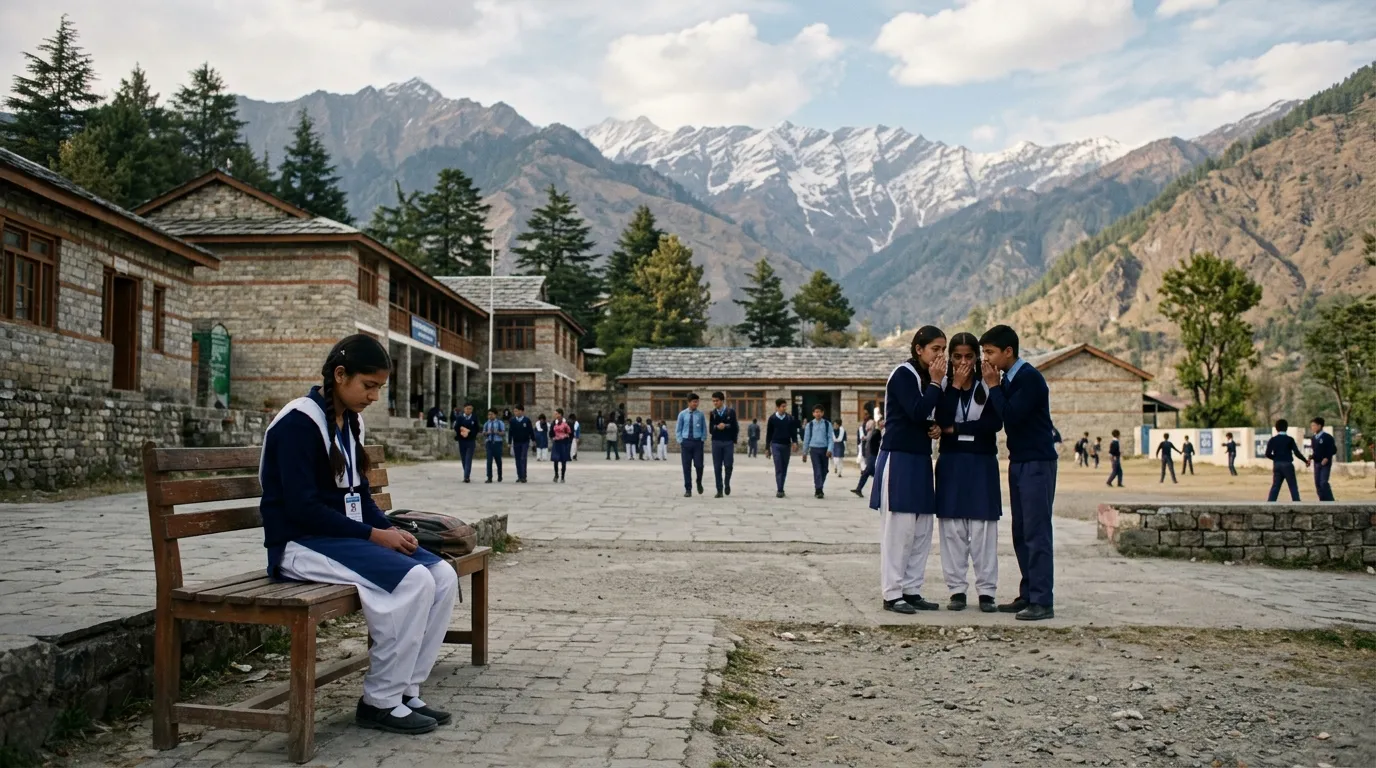
For decades, Indian schools policed the visible signs of fights—the pushing in hallways, the playground fights.
But they largely overlooked a quieter cruelty: the muffled whispers in the back row, the abrupt chill at the lunch table, and the class WhatsApp group that deliberately shuts one child out.
This is relational aggression. It does not leave a mark on the skin. It leaves a mark on the mind.
Between 2024 and 2026, educational researchers across India began to map this hidden landscape. Recent school-based surveys, ranging from urban hubs in Madhya Pradesh to the hills of Himachal Pradesh, reveal a stark truth. Bullying has evolved. The modern Indian classroom is a complex web of social ties. When one child pulls a thread to trip another, the whole web shakes.
What is Relational Aggression?
Relational aggression is the use of relationships to harm others. It is social sabotage. The tools are not fists; they are rumors, exclusion, and silent treatments. It is a calculated social weapon designed to strip a child of their peer support, damage their social standing, and isolate them from the herd.
The 2024–2026 Data: A Shift in the Indian Classroom
Recent data shifts how we view the Indian schoolyard. For years, society blamed the individual. We said the bully was bad; the victim was weak. New empirical studies prove this model wrong. Bullying is an ecosystem failure.
In 2026, researchers D. Bahl and colleagues published a landmark study in the journal PLOS ONE titled “Bullying among students: ecological insights from a school-based adolescent health survey, Himachal Pradesh, India.” Utilizing an ecological school-based health survey methodology, they analyzed adolescents across the region. Their findings conclude that relational aggression is deeply tied to the broader school ecosystem, noting that the complex social hierarchies in Indian classrooms create a unique breeding ground for social exclusion.
Similarly, a 2025 cross-sectional survey evaluating bullying among secondary school children in Jabalpur city, Madhya Pradesh, surveyed 450 school children (classes 6 through 10). The findings were an eyeopener: over half (56.66%) of the students reported occasional bullying, with a significantly high prevalence of “social” and relational bullying scores among adolescents, proving that covert exclusion is just as rampant as overt physical aggression.
Summary of Recent Indian Research on Relational Aggression
| Study & Authors | Journal & Year | Methodology & Location | Key Findings |
|---|---|---|---|
| Bullying among students: ecological insights from a school-based adolescent health survey (D. Bahl et al.) | PLOS ONE (2026) | Ecological school-based health survey in Himachal Pradesh, India. | Highlighted the ecological factors driving bullying. Proved that traditional surveillance fails because social exclusion overlaps heavily with systemic classroom hierarchies. (Link) |
| Evaluating bullying among secondary school children in Jabalpur city, India (Various Authors) | Journal of Clinical Child Practice (2025) | Quantitative Cross-sectional survey of 450 children (Classes 6–10) in Jabalpur, MP. | 56.66% reported occasional bullying. Researchers recorded exceptionally high “social” bullying scores, proving relational aggression is a primary threat in middle schools. |
| Exploring the Influence of Familial Relations on Relational Aggression (S. Gupta & S. Kewalramani) | International Journal of Indian Psychology (2024) | Cross-sectional study surveying 200 Indian young adults. | Found a significant link between family relationship quality and relational aggression. Highlighted differences between “proactive” and “reactive” social damage based on gender dynamics. (Link) |
The Anatomy of a Whisper: How the Ripple Starts
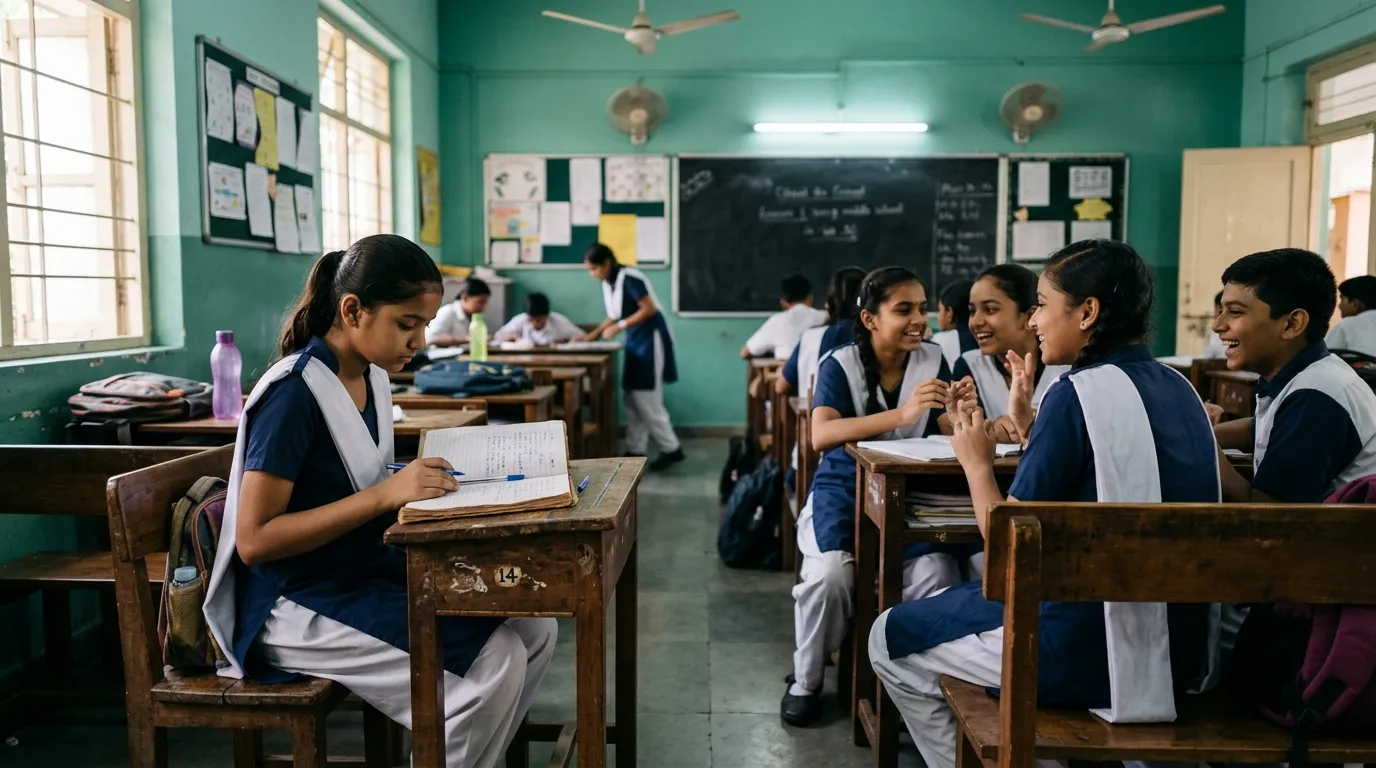
An act of relational aggression rarely stays between two people. It needs an audience. It needs a network.
When an aggressor starts a rumor, they do not just attack the target. They test the waters. They speak to a friend. The friend faces a choice: speak up and risk becoming the next target, or nod and join the fold. Fear drives the nod. The rumor spreads.
This is the ripple effect. The aggression moves from the center to the edges. It corrupts the bystanders. It shifts the norm of the room. Soon, exclusion becomes the rule.
(Below is an interactive map of this exact process. Click the stages to watch the classroom ecosystem change.)
The Classroom Ecosystem
Watch how relational aggression isolates a target.
1. The Spark
The Aggressor (Red) targets the victim (Blue) directly with a rumor, a cruel joke, or a deliberate act of exclusion. The rest of the classroom network remains loosely connected but largely unaware.
2. The Spread
The Aggressor pulls in the bystanders (Peers). Fearful of becoming targets themselves, the peers align with the Aggressor. The rumor spreads through the network, and the target begins to feel the shift in the room’s energy.
3. The Silence
The ecosystem freezes. The peers entirely sever their social ties to the Target to protect their own status. The Target is completely isolated, surrounded by a wall of silence. The bullying is complete without a single punch being thrown.
The Target’s Toll: Mind and Body
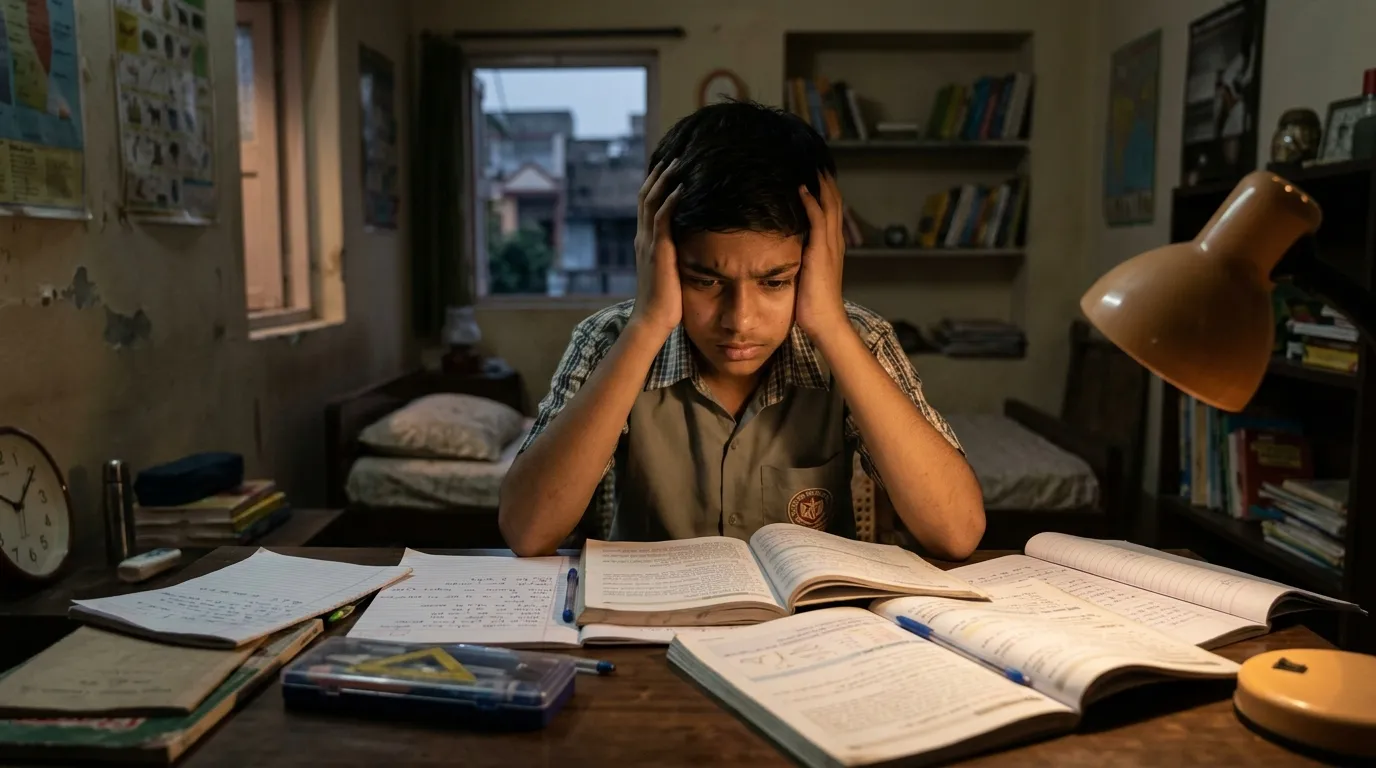
The human brain treats social rejection the same way it treats a physical burn. The pain networks literally light up on brain scans. When a child faces the freeze, their body floods with cortisol, the core stress hormone. They enter a state of high alert.
This psychological toll was rigorously mapped in a 2024 study published in the International Journal of Indian Psychology by researchers S. Gupta and S. Kewalramani. In their paper, “Exploring the Influence of Familial Relations on Relational Aggression in Young Adults,” they utilized a cross-sectional methodology surveying 200 Indian young adults.
Their findings highlight that relational aggression does not happen in a vacuum—it is heavily influenced by familial dynamics. The researchers found a “significant link between family relationship quality and relational aggression,” emphasizing that a child who is frozen out often brings home a complex web of “reactive” emotional damage. A child who is frozen out learns that the world is not safe. Their grades slip. They carry this shadow into adulthood, building walls to keep the pain out.
The Bystander’s Burden
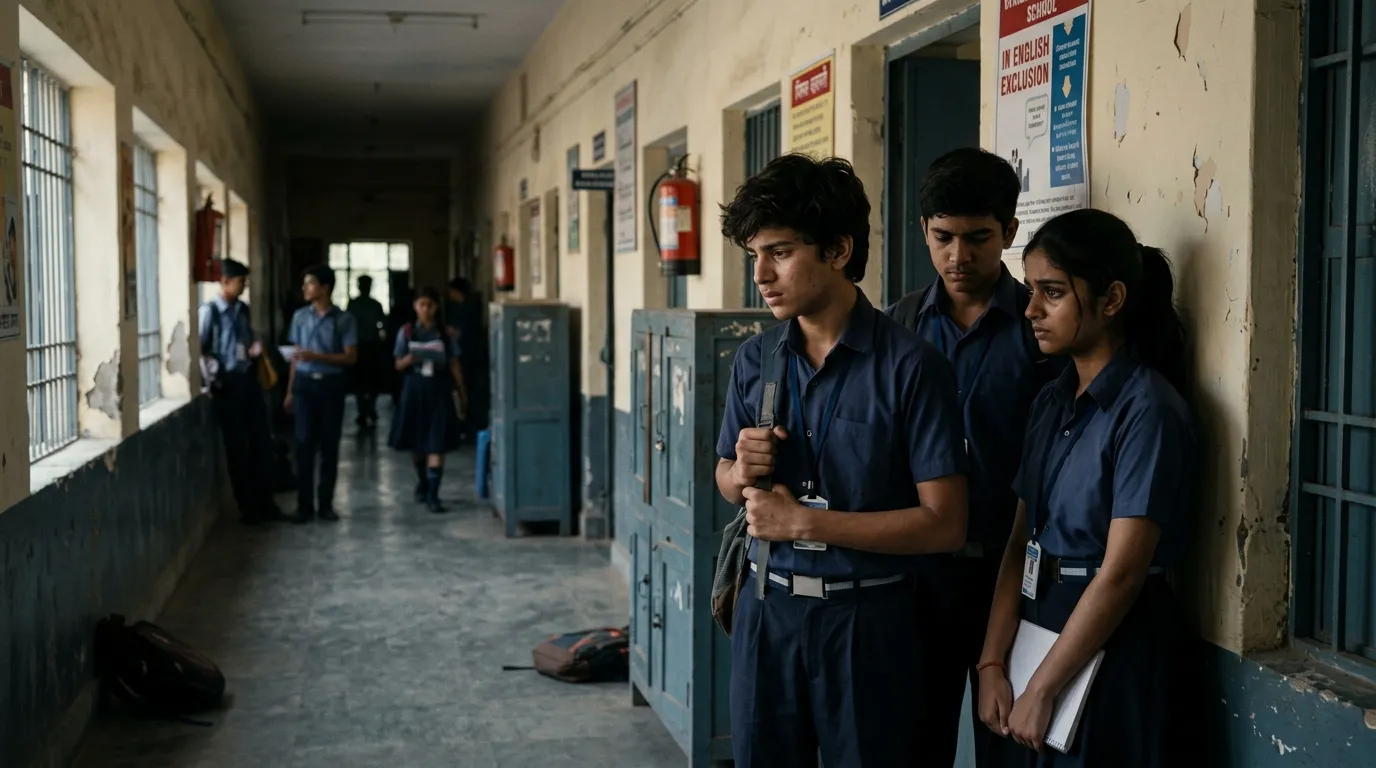
We often weep for the target, but the ripple hits the bystanders, too. The children who watch the freeze learn a dark lesson. They learn that cruelty brings power. They learn that silence brings safety.
In a classroom where relational aggression goes unchecked, trust dies. The room grows cold. The children split into factions. The bystanders suffer a quiet, corrosive guilt. They know the freeze is wrong, but the fear of the mob stays their hand. This chilling effect kills empathy. It stunts the moral growth of the whole class.
The Gender Myth
For years, people called relational aggression “mean girl behavior.” Recent data from Indian high schools shatters this myth. The 2024 studies note that boys use the freeze just as much as girls. They merely use different tools. While girls might build complex webs of rumors, boys often use digital exclusion—kicking a peer out of a gaming squad or dropping them from a WhatsApp group. The pain is the same. The ripple is the same. Anti-bullying designs must be gender-sensitive, recognizing that the silent freeze knows no gender.
How to Break the Chain
Awareness is not enough. We must act. Recent systematic reviews of anti-bullying programs in Indian high schools show that traditional punishments fail. Suspending the aggressor does not thaw the freeze. It only makes the whispers harder to hear. We need a new way.
1. Train the Radar
Schools must train teachers to spot the freeze. We must close the perceptual gap identified by recent Indian researchers. Teachers must learn that a sudden shift in seating, a coordinated eye-roll, or a dropped group chat is a blaring red flag. They must step in early.
2. Teach Emotional Literacy
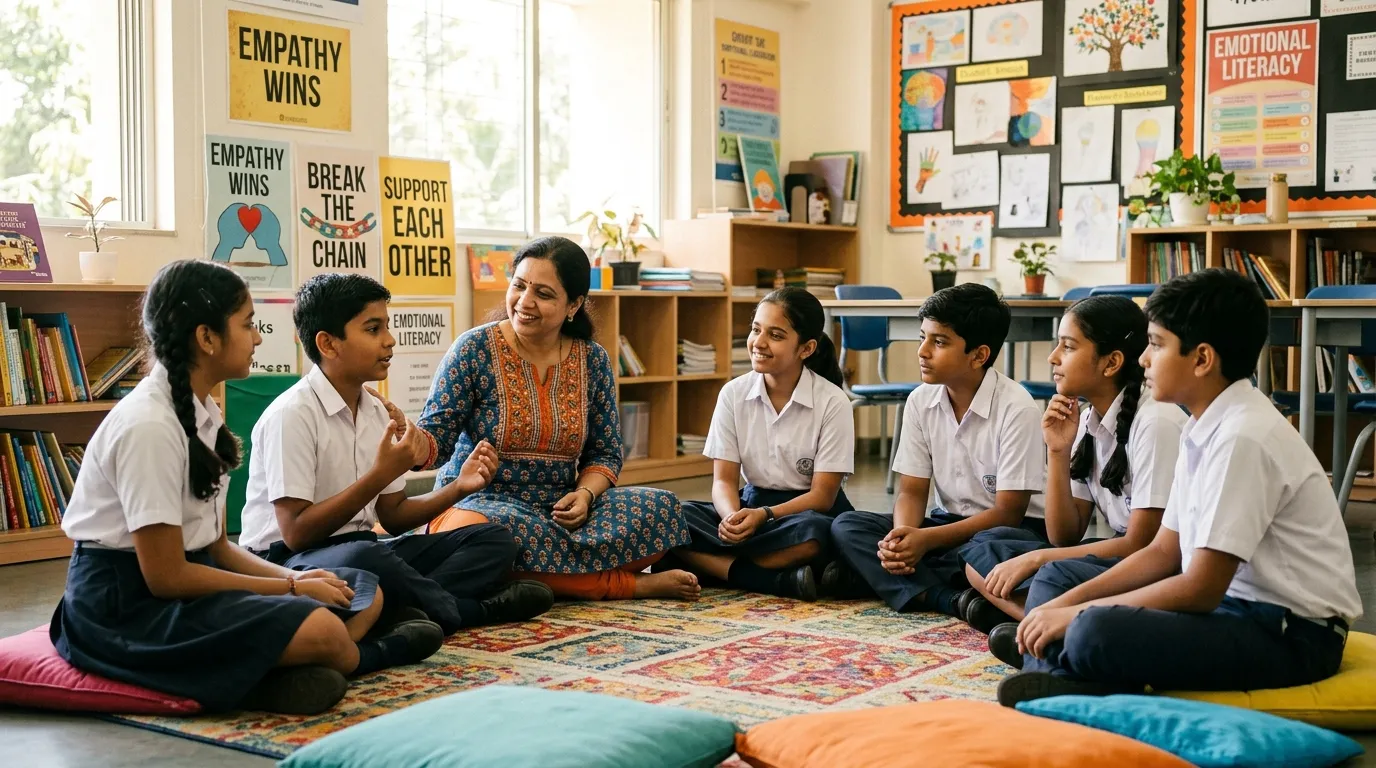
We must give children the words to name their pain. When a child can look a teacher in the eye and say, “I feel left out,” they take power back from the rumor. Social-emotional learning must stand beside math and science.
3. Build Up the Bystander
The aggressor draws power from the silent crowd. To kill the aggression, we must break the silence. Schools must teach bystanders how to act safely. A simple, “That is not cool,” from a peer holds far more weight than a lecture from an adult. We must make inclusion the high-status move.
4. Address the Root, Not Just the Branch
Aggressors are often driven by their own insecure attachments. They bite because they fear being bitten. Interventions must involve the family. We must build psychological support systems that heal the root cause of the fear rather than just policing the symptom.
The Final Word
Relational aggression is a silent storm. It sweeps through the Indian classroom, leaving broken bonds and anxious minds in its wake. But a storm needs the right climate to rage. If we change the climate—if we train the teachers, empower the bystanders, and rely on hard data from our own educational ecosystem—we can stop the ripple. We can build a room where every child has a seat at the table.