

Quick Summary
The Early Warning Window
More than 3 in 5 children showing attendance barriers exhibit symptoms before Key Stage 1. 41% of parents spot indicators in Reception, and 21% see them in nursery.
A Neurodevelopmental Mismatch
An overwhelming 94.5% of children struggling with attendance have neurodevelopmental profiles, primarily autism, ADHD, or sensory processing differences.
The Reality of “Masking”
Many children display highly compliant behavior at school, suppressing their natural regulation needs through intense psychological effort, only to suffer massive physical and emotional collapses at home.
Britain is in the grip of a school absence emergency. Across England, persistent absence has nearly doubled since the Covid-19 pandemic, soaring from 10.9% in 2018/19 to 18.7% in 2024/25. The standard state response relies on punitive measures: attendance trackers, fines, and intensified monitoring.
A recent study exposes a massive structural blind spot in this strategy. The crisis does not stem from behavioral disobedience or parental laxity; it is a physiological response to school environments that children find deeply unsafe.
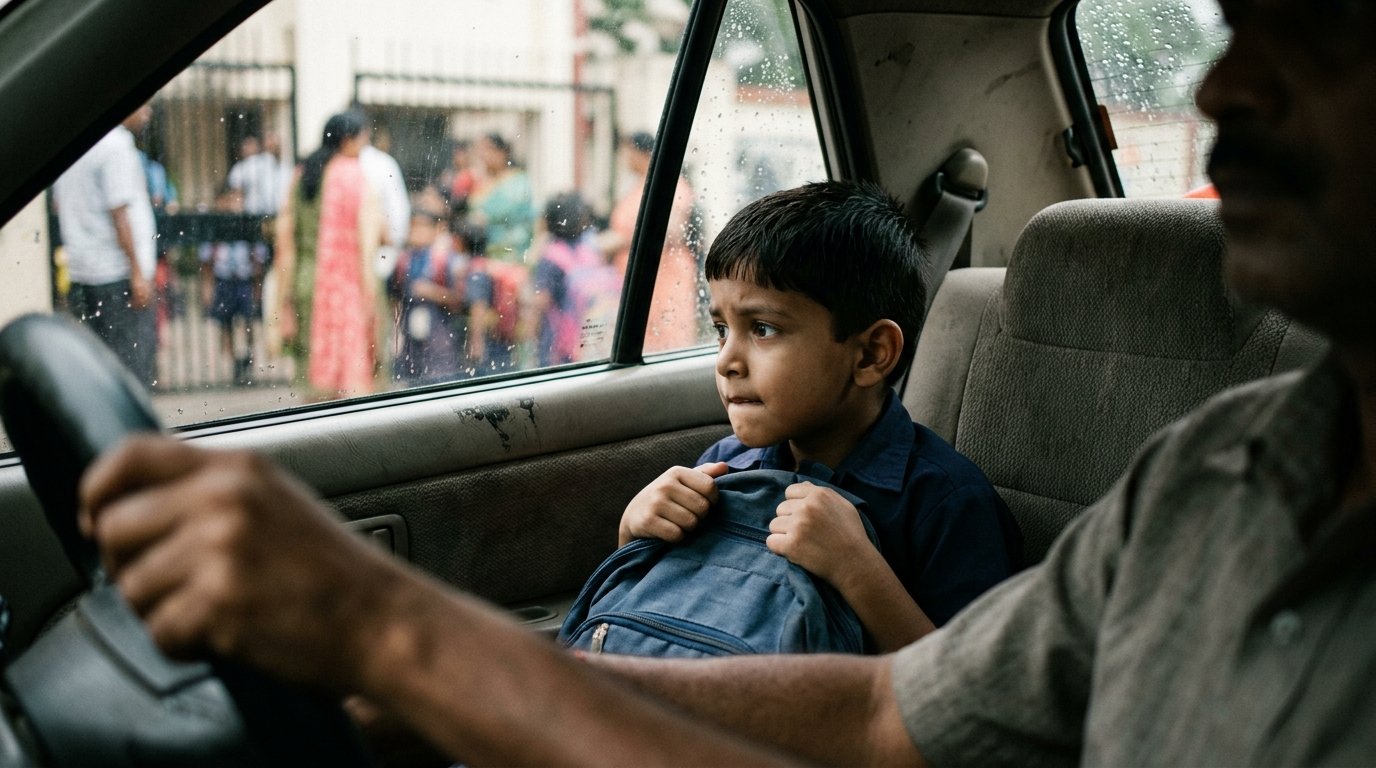
Nearly 41% of parents observe barriers to school attendance during their child’s very first year of formal education in Reception (ages 4–5). Even more concerningly, 21% of parents notice these warning signs as early as nursery. Far from being a sudden adolescent rebellion, school attendance problems (SAPs) take root in the earliest weeks of childhood education, going largely ignored until they become deeply entrenched.
This co-produced study, published in the British Educational Research Journal (BERJ), was conducted by a multidisciplinary team led by Tereza Aidonopoulou-Read, Michelle Pyer, and Jackie Campbell of the University of Northampton, alongside advocacy experts. They analyzed the detailed experiences of 657 families, prompting a profound shift in how we must understand classroom distress.
The Science of Classroom Stress: Polyvagal Theory
To make sense of the distress parents observe, the research team applied Polyvagal Theory (PVT), a physiological framework developed by neuroscientist Dr. Stephen Porges. Rather than viewing school refusal as a psychological choice, PVT reveals it as an involuntary survival state of the autonomic nervous system.
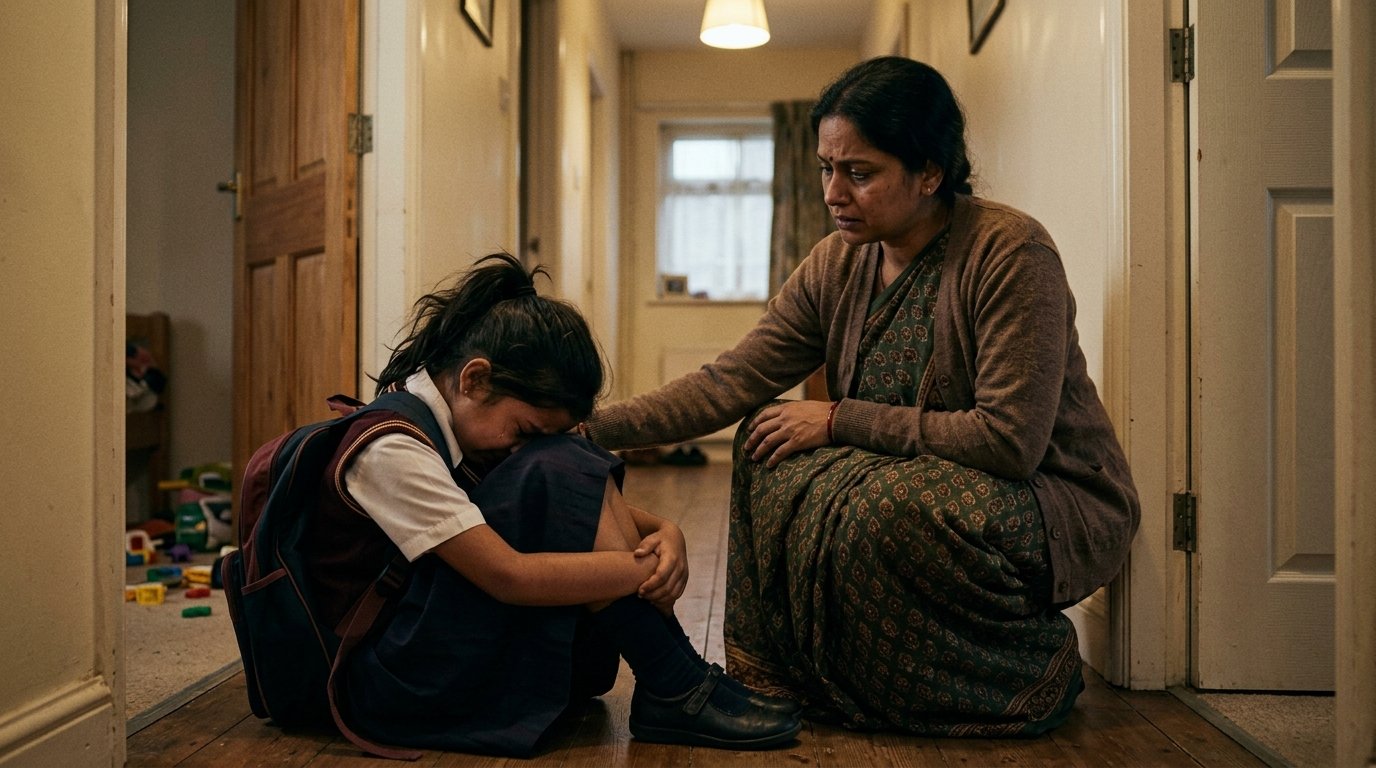
When a child’s nervous system detects safety, they are capable of calm regulation, social connection, and active learning. However, modern classrooms—characterized by sensory overload, rigid routines, and peer density—frequently trigger a subconscious threat response known as neuroception. If a child perceives their environment as hostile, their system shifts into survival modes to protect itself.
These nervous system states manifest in pre-conscious behaviors:
- Fight: Verbal and physical aggression, screaming, or throwing objects when the pressure to attend school escalates.
- Flight: Active escape attempts, such as running out of the classroom or hiding.
- Passive Flight: Subtle avoidance, such as frequent requests to use the toilet or fabricating physical needs to escape to a quiet medical room.
- Freeze: An inability to speak or move at the school gates, or becoming completely mute in class.
- Fawn: Masking and over-compliance to please staff, which conceals severe underlying distress.
The “Jekyll and Hyde” Masking Phenomenon
One of the most painful experiences reported by parents is the severe disconnect between their child’s behavior at school and at home. Because children who “fawn” are desperate to comply, schools frequently report that the child is “fine” once inside.
This compliance is achieved through exhausting psychological effort. Once they cross the threshold of their own home—their safe space—the pent-up physiological pressure explodes.
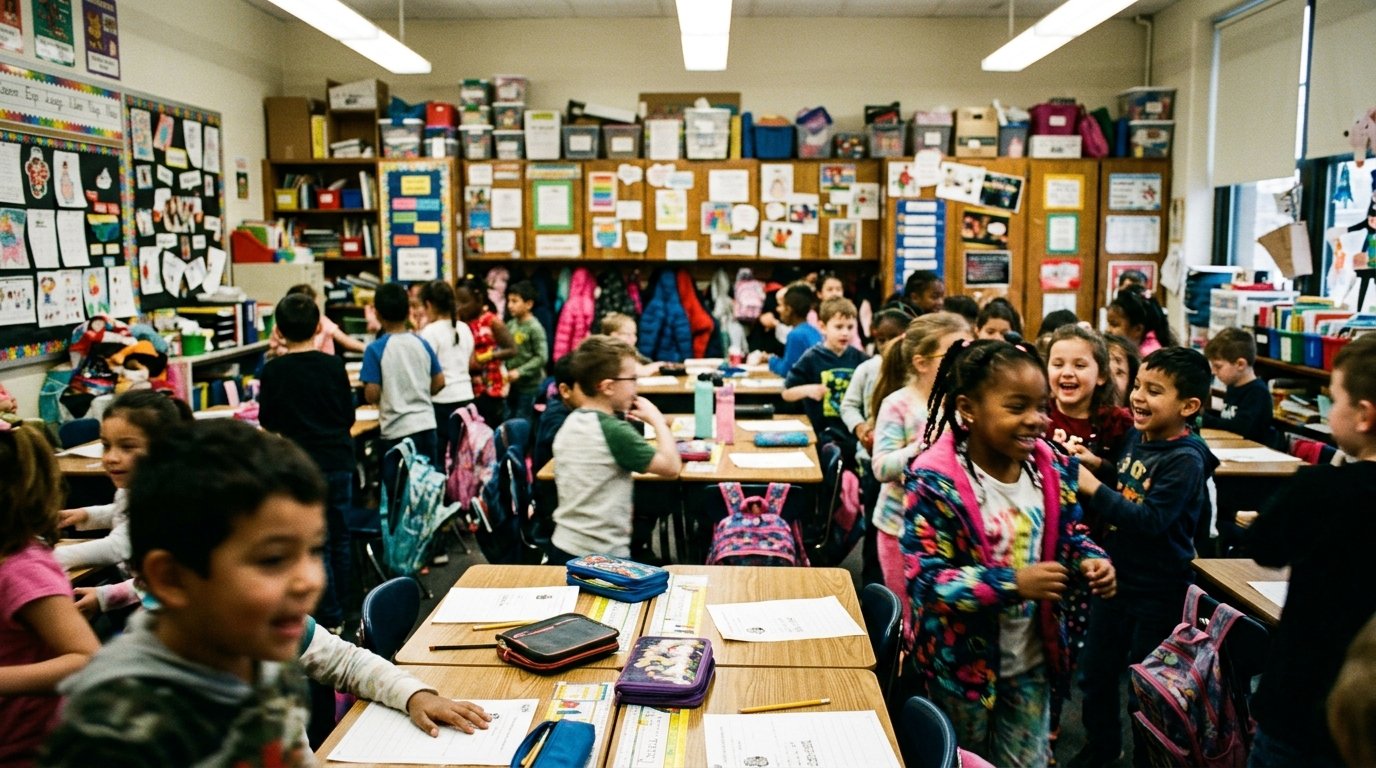
Parents describe children falling asleep in the hallway out of sheer exhaustion, having uncontrollable meltdowns, wetting themselves long after toilet training was completed, or refusing to eat for days. Because schools rely on superficial compliance as a metric for wellbeing, parents raising these early warnings are routinely dismissed or actively blamed. The study identifies this as a form of institutional betrayal, where schools systematically reject the lived observations of parents in favor of rigid attendance data.
A Demographic Portrait of Mismatch
Of the children represented in the study, neurodevelopmental differences were near-universal, affecting 94.5%. Mental health or psychiatric disorders—such as generalized anxiety, OCD, or situational mutism—were present in 65.4%.
The researchers note that anxiety is not a standalone psychiatric problem in these children, but a direct consequence of unaccommodated neurodivergent needs. For instance, 81.8% of the anxious children in the study were autistic, and 43.8% had ADHD. When these children are forced into sensory-heavy, crowded environments with high academic demands, their systems collapse.
Table 1: School Type at Onset of School Attendance Problems (SAPs)
The vast majority of attendance problems begin in mainstream settings, reflecting the severe lack of environmental adaptation in standard state education.
| School Type at Onset | Children (n) | Percentage (%) |
|---|---|---|
| Local Authority Maintained School | 378 | 58.6% |
| Academy | 123 | 19.1% |
| Nursery / Pre-school / Childminder | 104 | 16.1% |
| Other Settings | 14 | 2.2% |
| Free School | 10 | 1.6% |
| Independent School | 10 | 1.6% |
| Special School | 3 | 0.5% |
| Home Education | 2 | 0.3% |
| College | 1 | 0.2% |
Table 2: Co-occurring Conditions of Children Experiencing Anxiety
School-based anxiety is heavily clustered around neurodevelopmental profiles and physical comorbidities, showing that attendance barriers are a systemic, multi-layered issue.
| Co-occurring Condition with Anxiety | Children (n) | Percentage (%) |
|---|---|---|
| Autism | 278 | 81.8% |
| ADHD | 149 | 43.8% |
| Sensory Processing Disorder | 122 | 35.9% |
| Pathological Demand Avoidance (PDA) | 97 | 28.5% |
| Hypermobility | 80 | 23.5% |
| Social / Behavioural Difficulties | 67 | 19.7% |
| Situational Mutism | 60 | 17.6% |
| Dyslexia | 58 | 17.1% |
| Obsessive Compulsive Disorder (OCD) | 45 | 13.2% |
| Avoidant Restrictive Food Intake Disorder (ARFID) | 45 | 13.2% |
| Dyspraxia | 43 | 12.6% |
The Policy Mismatch: Why The White Paper Will Fail
On February 23, 2026, the government published its highly anticipated Schools White Paper, “Every Child Achieving and Thriving”. The paper outlines a massive £1.6 billion “Inclusive Mainstream Fund” alongside a statutory obligation to create Individual Support Plans (ISPs) and deploy “Experts at Hand” multidisciplinary teams.
While funding levels are unprecedented, the Northampton research warns they will fail if we do not address environmental suitability. Procedural interventions—like writing ISPs or expanding tracking software—do nothing to reduce the sensory load of a 30-pupil classroom, harsh fluorescent lighting, or rigid behavioral compliance models that trigger physiological panic.
If the school environment itself is a source of acute stress, adding more specialists simply tries to cure the child of a rational reaction to an unlivable space. The authors argue that environmental audits must be legally mandated before schools are allowed to implement punitive attendance penalties.
The Power of Lived Experience
The methodology of this study utilized a co-production model, working for six months with parents who had lived experience of SAPs. When deployed online, the survey achieved an astonishingly low dropout rate of 0.46%, indicating exactly how desperate families are to share their realities.
A simple, open-ended question was posed: “Please tell us what early indications you noticed that suggested difficulties with their education.” Word-frequency analysis revealed a heartbreaking domestic landscape dominated by “anxiety” (336 references), “meltdowns” (213 references), “crying” (202 references), and “sleep difficulties” (162 references).
Key Takeaway
Reframing “refusal”: Instead of pathologizing individual behavior or treating “emotionally based school avoidance” (EBSA) as a child’s psychological failure, schools must address “environmental suitability.” The crisis requires adapting the sensory and social demands of the school itself, rather than deploying punitive tracking systems against overwhelmed nervous systems.
For years, parents have watched their children cry on Sunday nights, complain of agonizing morning migraines, or sit frozen in the car outside the school doors. These are not behavioral ploys. They are the cries of a child’s nervous system pleading for safety. If we want to resolve the school attendance crisis, we must stop forcing vulnerable children to adapt to a broken system, and instead adapt our schools to fit the children.