

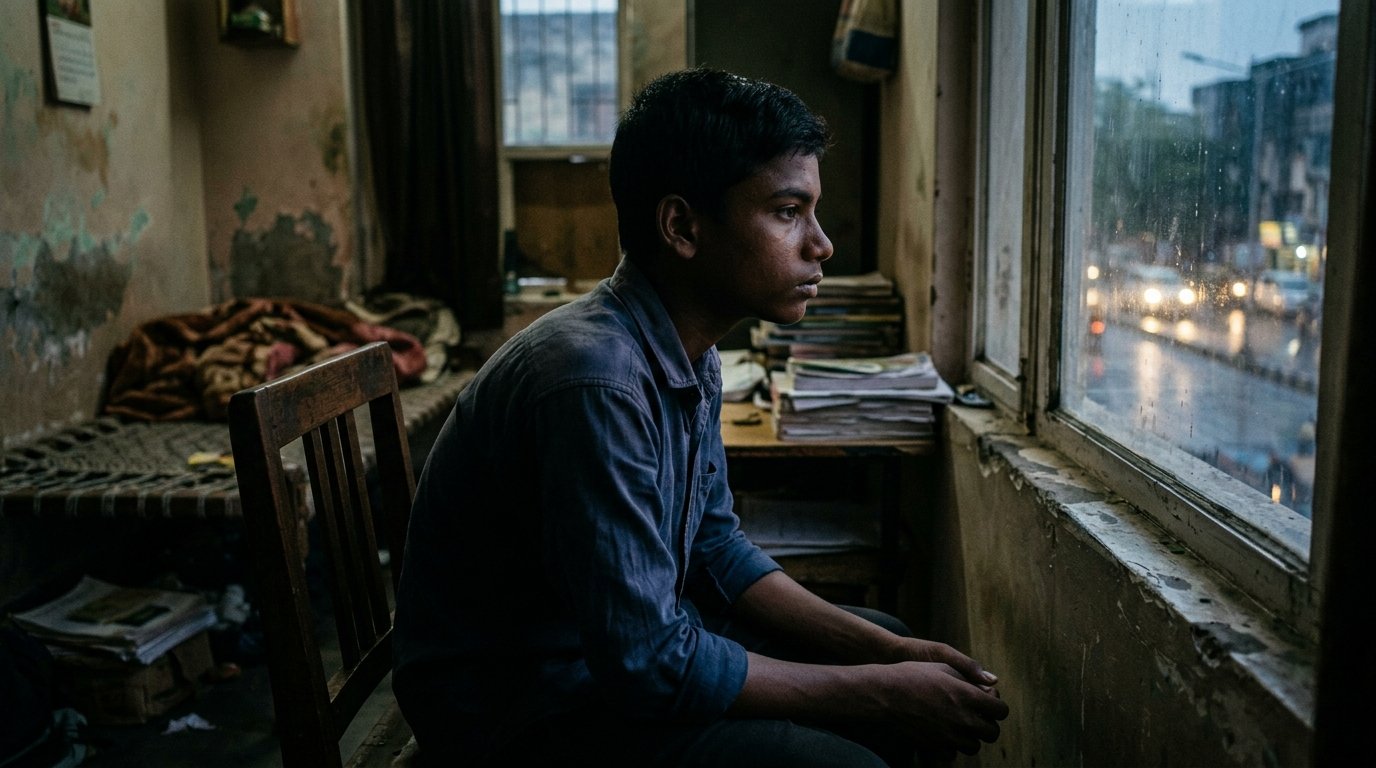
Growing up in India is often a collective, deeply communal experience, cushioned by the warm embrace of extended families and close-knit neighborhood networks.
Yet, for millions of children across the country, the reality behind closed doors is one of quiet, compounding dread.
In India, approximately 150 to 200 million people are diagnosed with psychiatric disorders and face complex social problems. Nearly 90% of those living with mental illness reside with their families.
This means that a psychiatric diagnosis is rarely an individual struggle; it is a shared household reality.
At the absolute center of this vortex are children.
Known in academic and clinical literature as COPMI (Children of Parents with Mental Illness), these young people represent one of the most vulnerable, yet systematically ignored, high-risk groups in India.
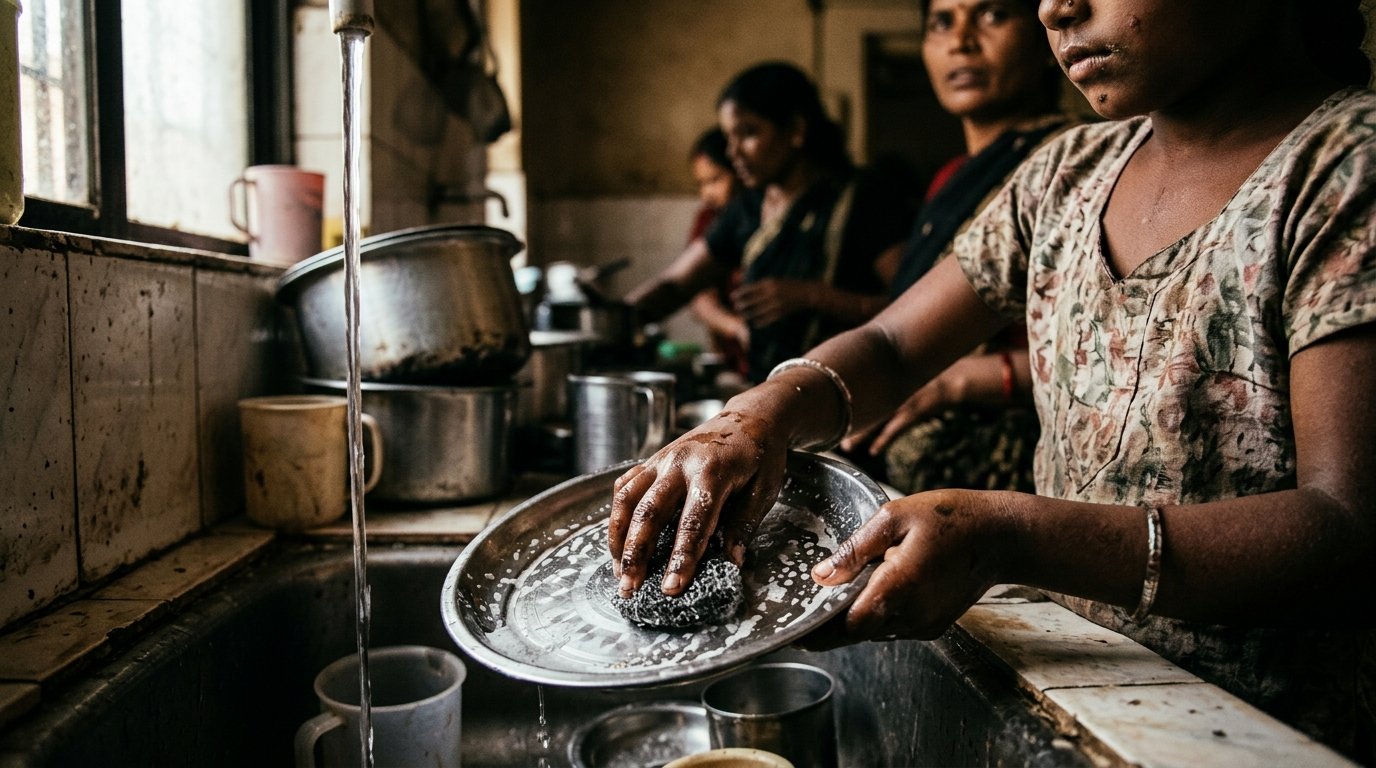
They carry not only a potential genetic predisposition to psychiatric conditions but are also exposed daily to a “poorly homeostatic” household environment: a volatile mix of unpredictability, marital discord, financial strain, emotionally unavailable family members, and the heavy burden of household chores.
A preprint review paper from researchers at the Department of Psychiatric Social Work at the LGB Regional Institute of Mental Health (LGBRIMH) in Tezpur, Assam, has laid both the global perspective of this crisis and proposed a possible roadmap for India.
The paper, titled “Children with Parental Mental Illness: A Bibliometric Analysis and Overview of Systematic Reviews with Intervention Pathways for India,” is authored by PhD scholars Sushmita Kerketta and Kilovi Swu, alongside Associate Professor H. Sobhana and Professor P. Sonia Deuri.
The study represents a crucial step forward for South Asian psychiatric research, offering an exhaustive synthesis of global intervention strategies and translating them into pragmatism for low-resource settings.
The Global Research Disparity: A West-Centric Lens
To understand why Indian children are being left behind, one must first look at where scientific knowledge is being produced. Kerketta and her colleagues conducted a comprehensive bibliometric analysis of 1,097 English-language articles published globally between 2006 and 2026.
Their findings reveal a geographical and institutional disparity.
Scientific output on COPMI has risen sharply over the last two decades—surging from a negligible average of fewer than 1.3 articles annually before 2017 to a peak of 102 articles in 2022.
However, this intellectual boom is heavily concentrated in high-income Western nations. Australia, Germany, the Netherlands, Norway, and the United Kingdom dominate the scientific production.
| Author | Organization & Country | Publications | Citations | Mean Citations |
|---|---|---|---|---|
| Andrea E. Reupert | Monash University, Australia | 77 | 2,593 | 33.68 |
| Darryl John Maybery | Monash University, Australia | 61 | 2,062 | 33.80 |
| Melinda Jane Goodyear | Monash University, Australia | 35 | 872 | 24.91 |
| Hanna Christiansen | Philipps University of Marburg, Germany | 26 | 472 | 18.15 |
| Karin T. M. Van Doesum | Radboud University, Netherlands | 23 | 1,191 | 51.78 |
This academic concentration in high-income Western countries creates a fundamental mismatch.
In the West, psychiatric care and family structures are highly individualized, and social safety nets are formal. In India, where family-based care is the default and formal safety nets are scarce, children are thrust into the role of primary caregivers or silent witnesses without any institutional cushioning.
The Tezpur researchers argue that South Asian policymakers cannot simply copy-paste Western models; they must adapt them to the socioeconomic realities of low-resource settings.
The Transgenerational Chain: How Trauma Travels
Growing up with a parent experiencing mental illness involves a “Transgenerational Model of Mental Disorder,” which outlines a series of nested, compounding risks:
- Parental Factors: The severity and chronicity of the parent’s psychiatric disorder, along with parenting competence or inadequacy.
- Family-Related Factors: Low socioeconomic status, marital discord, exposure to violence, and the presence or lack of support from another parent.
- Child-Related Factors: The child’s genetic vulnerability, attachment style, and existing cognitive and emotional regulation skills.
- Social Environmental Factors: Social isolation, a lack of social support, and extremely restricted access to professional mental health care.
When a parent is severely ill, household homeostasis collapses.
Children are often forced to take on adult chores, face emotional neglect from emotionally unavailable family members, and experience constant instability.
This persistent distress interferes with the child’s development of adaptive cognitive skills, leading to a failure to develop healthy emotional regulation strategies.
The Global Toolkit: What Works?
The Tezpur systematic review analyzed 10 high-quality systematic reviews and meta-analyses to extract the core components of successful preventive interventions.
Across the globe, three primary strategies emerged as highly effective:
- Psychoeducation: The most dominant intervention component. It improves parental and child understanding of mental illness, directly reduces societal and self-stigma, and significantly enhances communication within the family.
- Cognitive Behavioral Therapy (CBT): Widely utilized to help at-risk children modify negative thoughts, develop healthy coping mechanisms, and learn relaxation and problem-solving techniques.
- Family-Based Interventions (FB-I): Interventions that engage the entire family are consistently superior to single-child approaches. Research shows that whole-family programs improve parent-child relationships, strengthen family bonds, and reduce the risk of intergenerational transmission.
| Author(s) & Year | Review Focus | Core Outcomes & Findings |
|---|---|---|
| Landi et al., 2025 | Efficacy of psychosocial interventions | Small to moderate benefits at post-intervention in short and long term. |
| Maybery et al., 2024 | Quantitative outcomes in parental research | Mapped 136 outcomes across parent, child, and family domains. |
| Moltrecht et al., 2024 | Whole-family interventions | Demonstrated superior efficacy by addressing the entire family unit. |
| Puchol et al., 2023 | Preventive psychotherapeutic interventions | Reduces internalizing symptoms, especially at the 1-year follow-up mark. |
| Tapias et al., 2021 | Preventive psychological interventions | Psychoeducation emerged as a highly prominent and effective component. |
The Indian Reality
Despite the proven efficacy of these approaches, the review notes a stark gap in South Asian research. Out of the hundreds of clinical trials conducted globally, only a tiny handful have occurred in South Asia.
In India specifically, interventions have largely focused strictly on children of parents with alcohol and substance use disorders, utilizing psychiatric nurse-delivered group CBT to successfully reduce internalizing behavior problems.
While these Indian trials show excellent results, children whose parents suffer from severe psychiatric conditions like schizophrenia, bipolar disorder, or severe depression remain completely unreached by localized, peer-reviewed clinical trials. Furthermore, there is a severe lack of research targeting fathers, a lack of economic evaluations, and families are frequently left unsupported once routine therapeutic sessions end.
A Grassroots Roadmap for India’s Healthcare System
To protect these millions of vulnerable children within a severely overstretched mental health infrastructure, the Tezpur research team outlines a series of highly practical, low-cost strategies designed to integrate into the Indian mental health care delivery system:
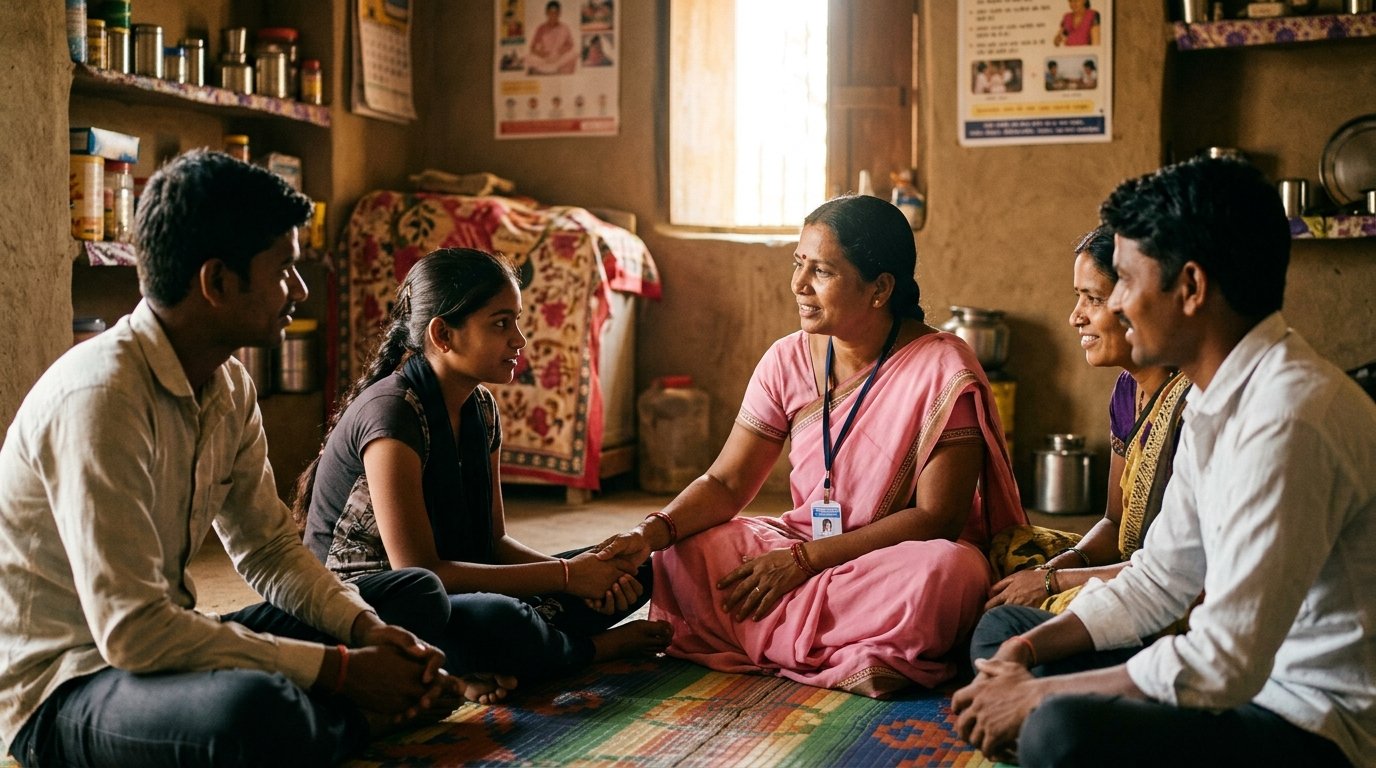
- Task-Shifting to Community Workers: Instead of relying solely on highly specialized psychiatric professionals, India must train its vast army of Accredited Social Health Activists (ASHAs) and Anganwadi workers. Under supervision, they can deliver basic “Family Talk” sessions directly to families in the community.
- School Linkages to the DMHP: Schools must become primary screening hubs. Linkages must be established between local schools and the existing District Mental Health Programme (DMHP) to identify children showing early signs of emotional distress.
- Adolescent-Friendly Health Centers: Integrating support for these children with existing centers under the national Rashtriya Kishor Swasthya Karyakram (RKSK) can provide safe, stigma-free counseling.
- Leveraging “Mission Vatsalya”: This flagship initiative emphasizes non-institutional, family-based care. Integrating parental mental health support into Mission Vatsalya aligns perfectly with national childcare goals.
- Socioeconomic Safeguards: The government must introduce national protection policies, special scholarships, and financial schemes specifically targeted at supporting children of parents experiencing severe psychiatric illnesses.
The Tezpur study makes it clear that acknowledging the presence of these children is the first step. By shifting care from clinics to communities, India has a unique opportunity to break the transgenerational cycle of psychiatric illness.
It is no longer just a matter of clinical psychiatry; it is a fundamental test of India’s social justice and its commitment to the future of its children.