
GANDHINAGAR: Have you ever wondered what truly makes a student successful, not just in passing exams, but in navigating the complex, vibrant, and incredibly real world? In a nation as diverse and varied as India—a truly multi-ethnic society—this question isn’t just academic; it’s fundamental to our future.
How exactly do we create schools where every student, regardless of their language, religion, or background, feels they belong, participates fully, and grows into a balanced, ethical, and intelligent adult?
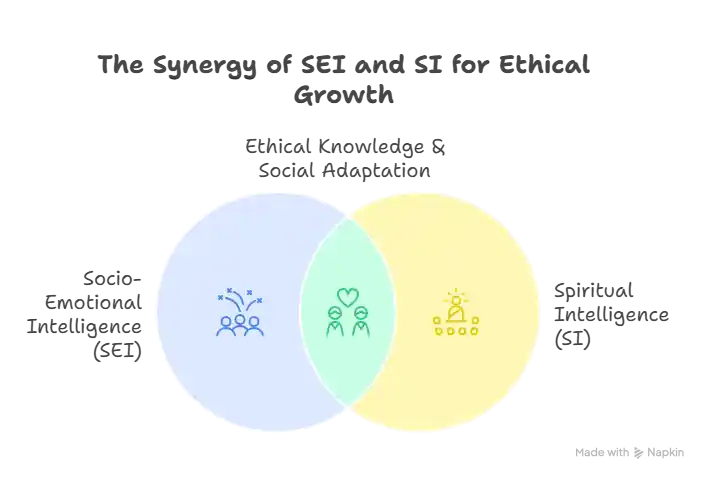
The critical path to building this equitable education framework isn’t simply about loading up the syllabus. It requires unlocking a deeper kind of intelligence: Socio-Emotional Intelligence (SEI), combined crucially with Spiritual Intelligence (SI). Experts are confirming that integrating these elements profoundly assists students in developing ethical knowledge and sharp social adaptation abilities, paving the way for complete educational growth. This transformation is especially critical when learners from vastly diverse ethnic groups gather and interact in one academic space.
To prove this theory, a major research study, focusing on the education system in Delhi, investigated the status, level, and necessary integration of these learning models within both Modern Private Schools and Traditional Gurukul Schools. The findings offer encouraging and necessary evidence that points directly toward the skills young people need to thrive in a global, collaborative environment.
The research, titled “Role of Socio-Emotional Intelligence Learning System in Multi-Ethnic Society: Context of India,” by Manoj Kumar Shukla and Dr. Navita Malik of Galgotias University, was published in the Journal of Marketing & Social Research (Volume 2, Issue 3, pp. 292–300) in May 2025. This inductive, exploratory, and descriptive study investigated the status and necessity of integrating socio-emotional intelligence (SEI) and spiritual intelligence (SI) to enhance the inclusion and participation of multi-ethnic students in schools. The quantitative survey in the Delhi region utilized a structured questionnaire on a sample of 600 secondary students equally drawn from Modern Private and Traditional Gurukul schools. Through statistical analysis (including regression and factor analysis), the study concluded that social intelligence is the most significant learning outcome for fostering collaboration and social peace among diverse ethnic groups.
The Big Question: Why Aren’t Grades Enough for True Success?
We all know instinctively that education must build the complete individual, fostering physical capabilities, intellectual growth, emotional maturity, and social skills. Mahatma Gandhi wisely observed that true education must enable the total growth of the body, mind, and heart.
But here is where the traditional model falters. In a multi-ethnic setting, simply exposing students to diverse classmates isn’t enough; their socio-emotional perceptions are impacted significantly, and without strategic guidance, obstacles will inevitably stand in the way of developing their intellectual and social abilities. Think of it this way: what good is an A+ in History if you can’t navigate a simple group project without conflict or showing respect?
Future success paths depend heavily on the interdependent relationship between social, emotional, and spiritual elements. This realization leads us to a crucial research gap: while many conceptual studies support the idea that SEI fosters resilience and inclusivity, Indian education systems have often lacked organized policies and adequate experimental investigations to establish its practical execution.
The Answer: We Must Prioritize Socio-Emotional Intelligence
So, what is this powerful kind of intelligence? SEI, as defined by foundational research, centers on emotional intelligence (EI) as “self-awareness and regulation”—knowing what you feel and how to handle it. When students acquire social intelligence (SI), they develop critical teamwork abilities, cultural understanding, emotional resilience, and moral strength, all of which lead to academic and life success.
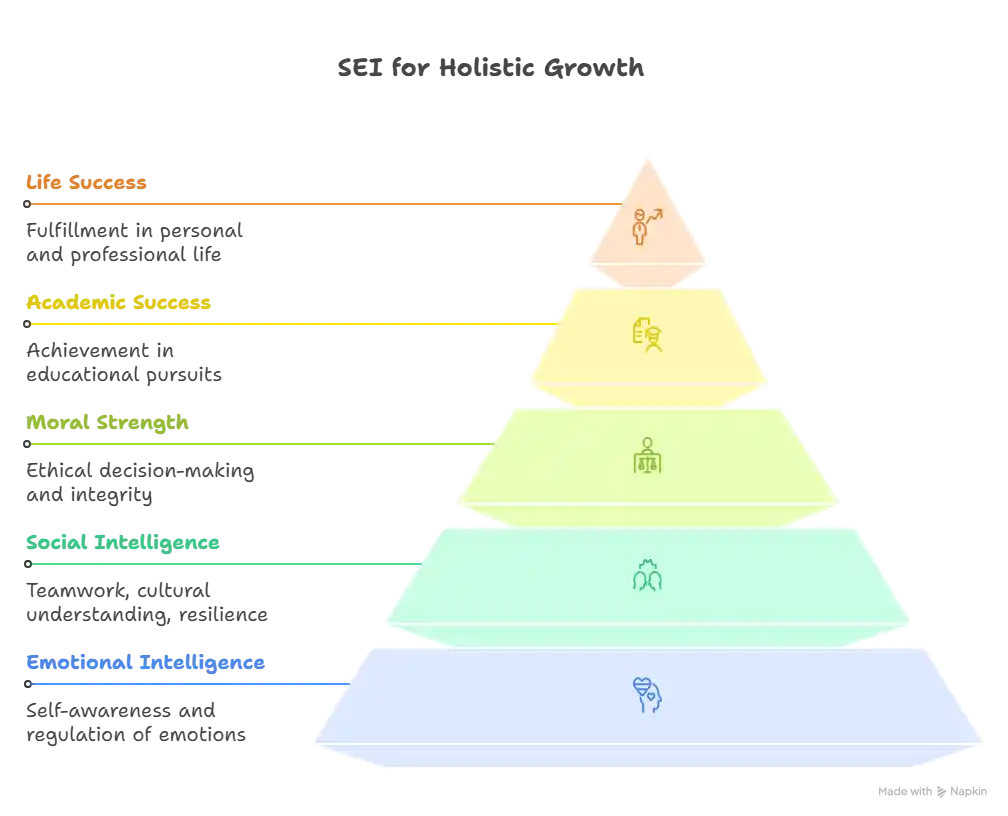
The study in Delhi set out to justify the role and prospects of this learning system in supporting students’ individual, social, moral, and intellectual growth, particularly in diverse classrooms. It aimed to provide the clear answer: the path to genuine inclusion is paved with SEI.
The Evidence: What Did the Data Reveal About Collaboration?
Researchers collected primary quantitative data using structured questionnaires from 600 secondary class students across 20 schools (10 Modern Private Schools and 10 Gurukul Schools) in Delhi. The goal was to explore key hypotheses: if SEI reflects inclusion and participation (H1), if SEI connects with SI (H2), and if SEI is necessary for strategic inclusion (H3).
When analyzing the overall learning outcomes, the results confirmed that balanced social, emotional, and spiritual intelligence learning approaches were present in both types of institutions. That’s encouraging news! However, a deep dive into the specific dimensions that affect multi-ethnic inclusion revealed which skills truly make a difference.
The Evidence on Impact: What Students Value Most
When analyzing the impact level of various social, emotional, and spiritual learning dimensions, the data showed clear strengths—what young Indians are already excelling at—and key areas for growth. (The following scores are based on a scale, confirming the presence and importance of the skill).
Leading the Way (Strongest Impact): This is where you and your peers shine brightest. Inclusion practices are clearly strengthened through basic respect, ethical attributes, and leadership capabilities.
- Peacekeeping scored the highest (a mean score of xˉ=3.87).
- Social Respect, Value, and Reliance were close behind (xˉ=3.79).
- Communication, Leadership, and Decision-Making also registered highly (xˉ=3.77).
Crucial Adaptive Skills (Moderate Impact): Essential survival and adaptation skills were also highly valued:
- Social Dependency (xˉ=3.85)
- Emotional Stability on Circumstances (xˉ=3.73).
The Area for Growth (Least Impact): Worryingly, key progressive skills showed the weakest impact, pointing to where our educational institutions must focus their energy.
- Innovation, Reasoning, and Progressivity scored the lowest (xˉ=3.41).
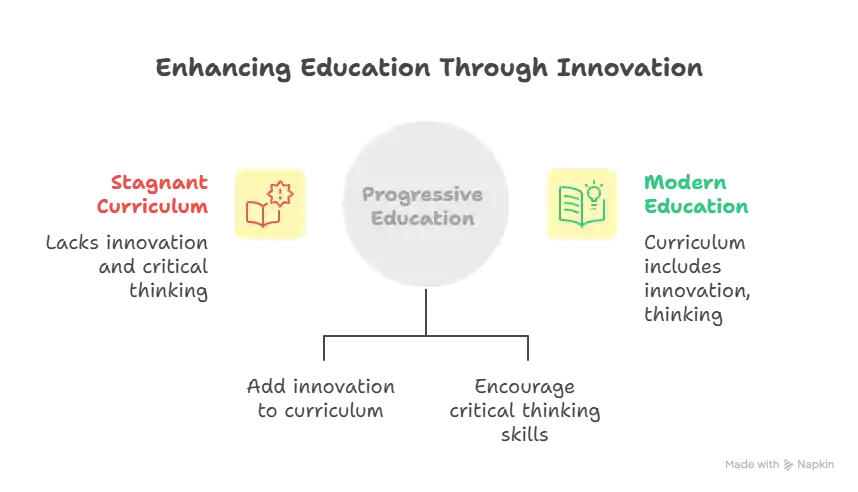
The key takeaway is profoundly encouraging: students fundamentally value collaboration, respect, and peace. However, schools must enhance modern progressive educational approaches, actively integrating innovation and critical thinking into their curricula. Building bridges of empathy is useless if we don’t also build bridges of ingenuity!
Sharpening the Focus: Which Intelligence Drives Inclusion?
The researchers didn’t stop at just measuring what skills were present. They used advanced statistical analysis (specifically, Regression analysis) to determine the mathematical significance of these intelligence types when directly focused on one outcome: multi-ethnic student inclusion.
Does focusing on Social, Emotional, or Spiritual learning produce the most significant results for multi-ethnic inclusion?
The Statistical Proof: What Actually Drives Inclusion
The rigorous statistical analysis provided a clear answer about which type of intelligence most powerfully drives multi-ethnic inclusion. The study confirmed that Social Learning is the leading and most powerful factor, boasting the highest coefficient (β1=0.52), meaning it has the strongest influence on ensuring students feel included and participate fully. Emotional Learning also proved highly significant, confirming its vital role in fostering inclusion, though its influence was less dominant (β2=0.27). Lastly, Spiritual Learning showed a definite, moderately significant connection (β3=0.18), confirming that ethical grounding is a supportive component of social unity. Crucially, because the significance values (p) for all three were so low (p<0.05 or p<0.01), we know these connections are not accidental—they are statistically proven necessities for building an inclusive future.
These results unequivocally prove that Socio-Emotional intelligence learning status and outcome reflects inclusion and participation of multi-ethnic students (Hypothesis H1 is TRUE). Furthermore, the necessity for Socio-Emotional Intelligence as a strategic model to permit fair inclusion and participation is evident (Hypothesis H3 is TRUE). This isn’t just a nice idea—it’s a statistically proven policy necessity.
Connecting the Dots: Why Spiritual Awareness Matters Too
While Social and Emotional Learning showed the highest statistical significance, the study did not dismiss the role of Spiritual Intelligence. In fact, it confirmed a necessary, foundational connection.
Socio-Emotional intelligence is deeply connected with spiritual intelligence, and together they impact students’ individual, social, moral, and intellectual growth (Hypothesis H2 is TRUE). Spiritual intelligence (SpI) is defined as the endeavor for discovering profound existential meaning—it’s the inner compass that guides your actions.
The findings show that key social aspects, such as social respect (with a correlation of 0.396), morality (0.390), and leadership (0.404), form an integral connection between SEI and SpI. This union assists students in developing deep ethical growth and lasting social unity. Your belief system, whatever it is, becomes the bedrock for how you treat others.
This insight leads to a critical set of recommendations for both traditional and modern schools:
- Private Modern Schools need to intentionally integrate spiritual-moral values into their curriculum. Smart education can’t be sterile; it needs a moral center.
- Traditional Gurukuls must update their instructional methods to boost minority engagement and enhance modern progressive educational approaches. Tradition must also embrace innovation.
Both forms of education must work toward developing students with both Intellectual Stability (a moderate impact dimension) and a strong foundation of Universal Morality and Compassion.
You Hold the Keys to Collaboration!
The rigorous analysis, using descriptive statistics, factor analysis, and regression studies on data from Delhi’s schools, definitively established the importance of Socio-Emotional Learning (SEI).
By fostering these critical skills—especially those related to social respect, morality, and leadership—schools are actively creating social peace and collaboration opportunities that fulfill the global multi-ethnic inclusive education objectives.
Students need quality motivation and strategic learning environments to guide them toward desirable transformative pathways and prospective academic results. Since this study confirmed the essential need for SEI learning to promote inclusion for multi-ethnic students, we know the exact steps we must take—and this is where you come in.
This is a call to action for every student, educator, and policymaker:
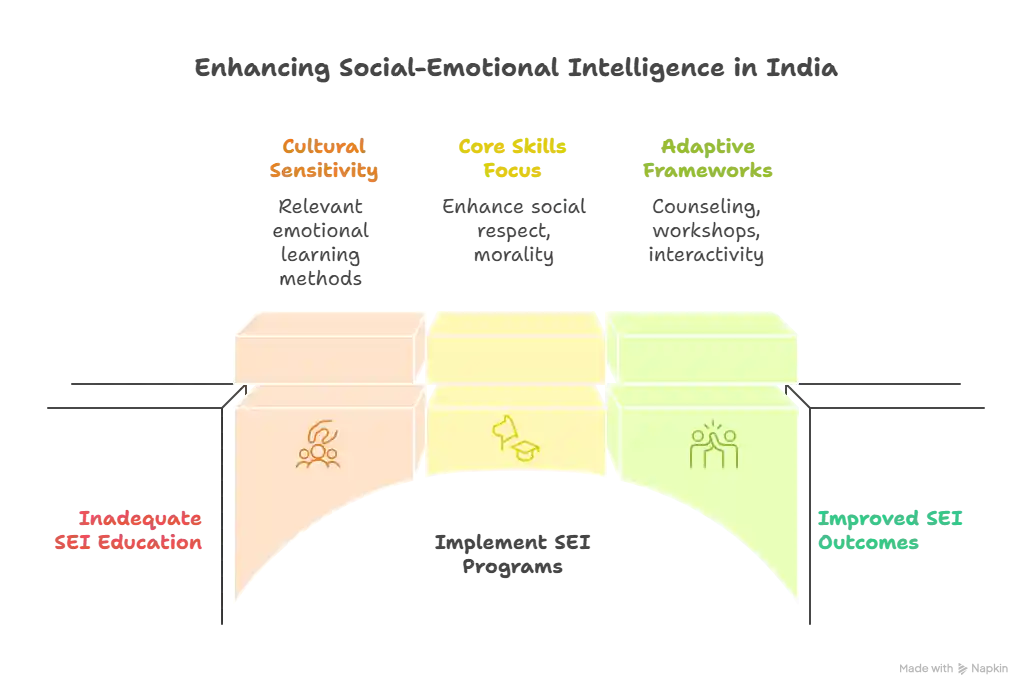
- Embrace Cultural Sensitivity: Policymakers need to implement culturally relevant emotional learning methods within India’s educational system. They must develop educational programs that unite cultural differences and moral lessons with social unity practices.
- Focus on the Core Skills: Schools must enhance policy measures in the areas that create the greatest impact: social respect, morality, and leadership development. These are the skills that make a classroom, a workplace, and a nation truly function.
- Be Adaptive and Progressive: Educational institutions must include special counseling, workshops, and better interactivity frameworks on SEI approaches to address the specific demands of multi-ethnic students. While the core moral structure is strong, institutions must consciously work on improving Innovation, Reasoning, and Progressivity (xˉ=3.41).
Your journey through education is about more than personal achievement; it’s about building a harmonious and productive school environment. You have the power to create a collaborative society by practicing empathy, showing respect, and developing self-awareness—the very skills proven by this rigorous evidence to enhance social cohesion. By actively engaging in Socio-Emotional and Spiritual learning, you are not just succeeding individually; you are guaranteeing an equitable and bright future for everyone around you. You are, quite literally, building the future of an inclusive India.