

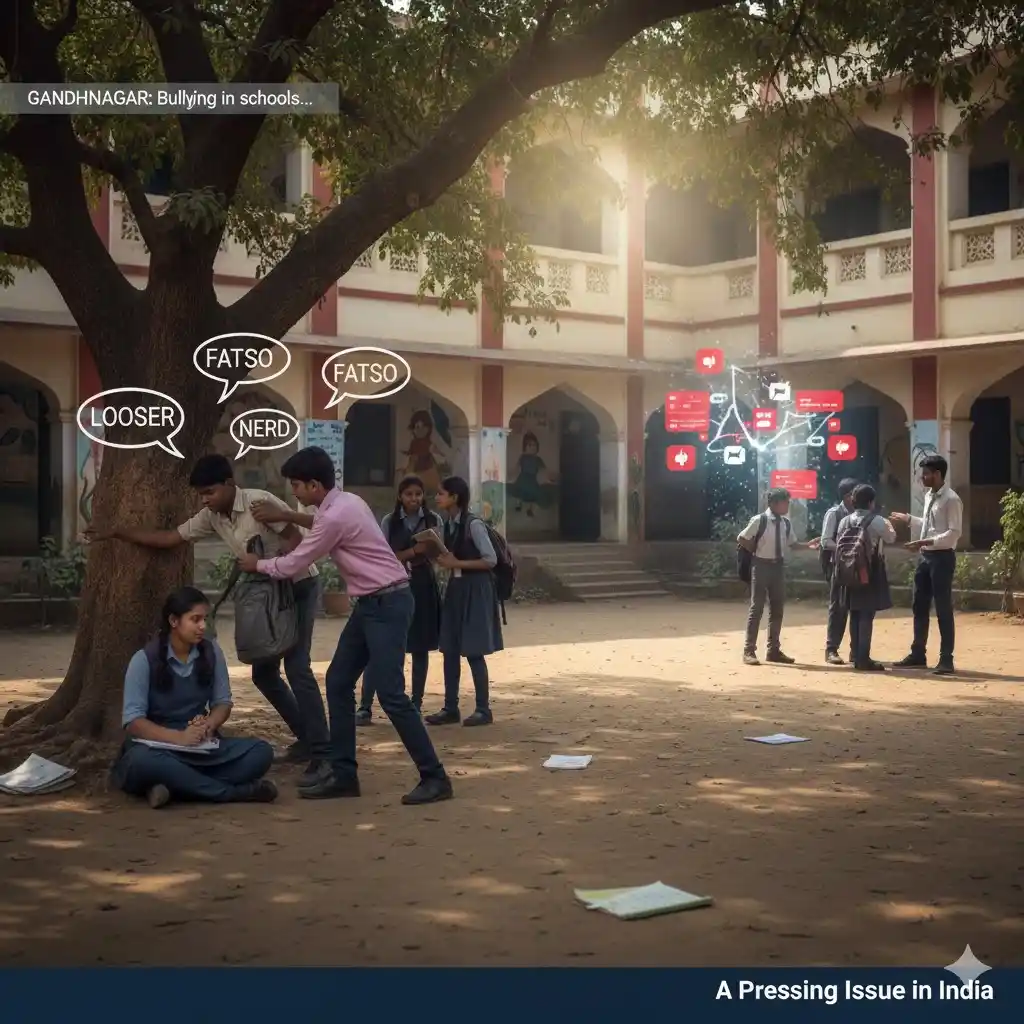
Bullying in schools is a major challenge with lifelong consequences. In India, where millions of adolescents spend a significant part of their day in classrooms, the problem is particularly serious. The good news is that evidence-based interventions are beginning to show what can work in tackling bullying.
Why is bullying in Indian schools such a pressing issue?
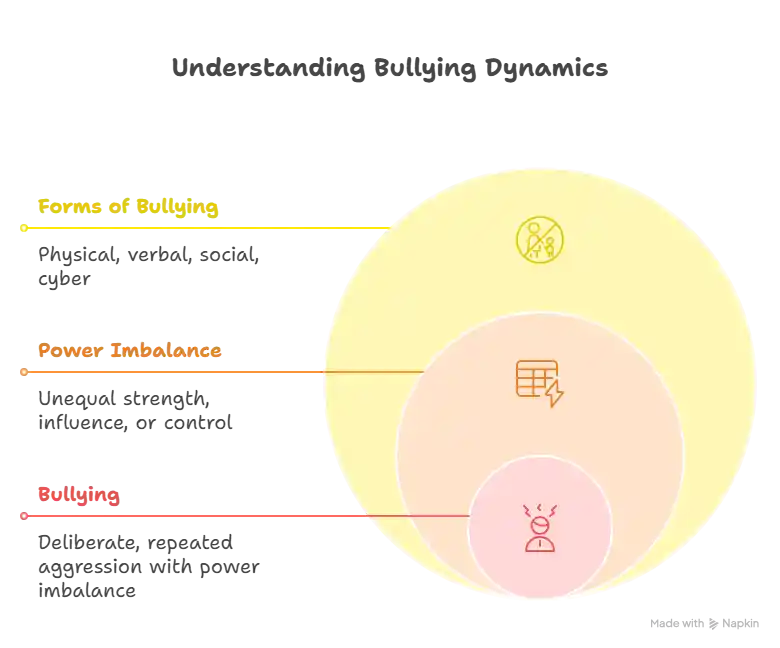
When most people think of bullying, they imagine classroom teasing or playground fights. But research defines bullying more sharply: it is deliberate, repeated, and unprovoked aggression involving an imbalance of power. That imbalance could be physical strength, social influence, or even digital control.
Bullying takes many forms:
- Physical bullying: hitting, pushing, or damaging belongings.
- Verbal bullying: mocking, name-calling, or making threats.
- Social or relational bullying: spreading rumors, isolating a student, excluding them from groups.
- Cyberbullying: targeting peers through phones, messaging apps, or social media.
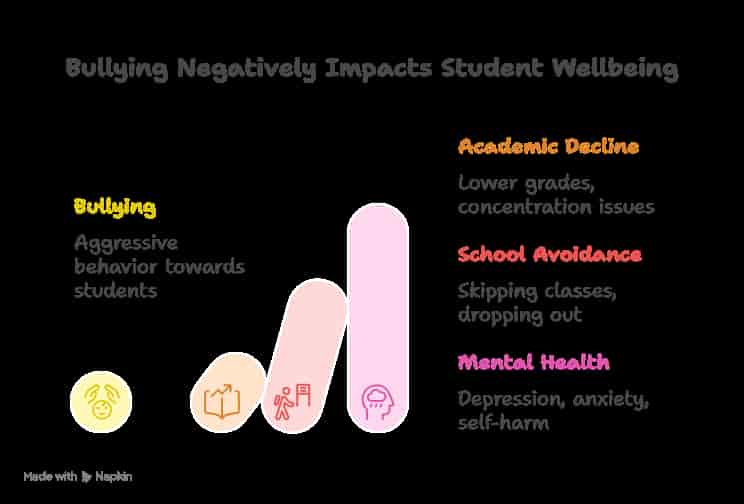
The harm is rarely temporary. Studies show that students who are bullied experience:
- Lower academic performance and concentration problems.
- School avoidance or dropping out altogether.
- Mental health issues such as depression and anxiety.
- In some cases, self-harm or suicidal thoughts.
India’s scale magnifies the issue. With over 1.5 million schools and 250 million adolescents, even a modest prevalence rate translates into millions affected. And the prevalence is far from modest.
The evidence on prevalence
- In Gujarat, one study found that 70% of students were involved as either bullies or victims. Cyberbullying affected about 2.7%, mostly boys.
- In Chandigarh, the prevalence was 25.6% overall, but significantly higher in private schools (33%) than in government ones (19.2%).
- In Kerala, about 15.3% of adolescents reported being bullied twice a month or more.
- Across regions, cyberbullying is climbing, with 6.4% of girls and 5.6% of boys reporting experiences.
Taken together, the review estimates an average prevalence of 31.4% in Indian schools. This aligns with global studies showing roughly one in three students experiences bullying, but it also shows pockets in India where the problem is worse.
The consequence is that a significant portion of India’s school-going youth face a daily environment of fear and insecurity—making it an urgent educational and public health issue.
What causes bullying in Indian adolescents?
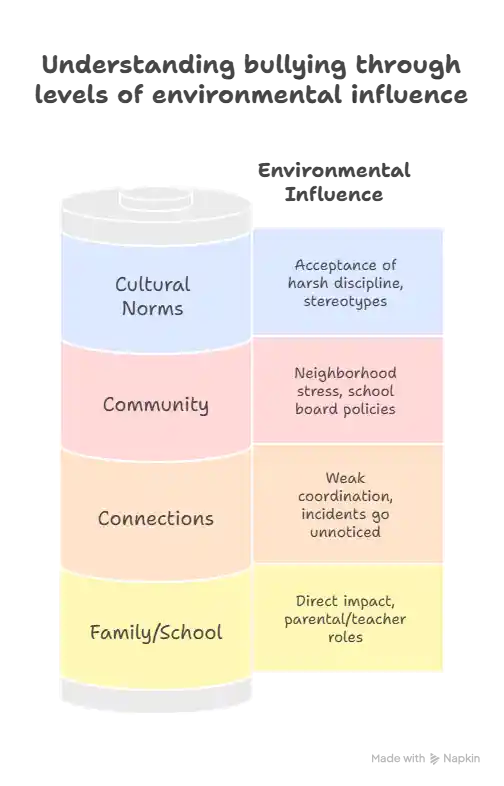
To address bullying, it helps to understand the conditions that allow it to thrive. Researchers often use Bronfenbrenner’s socioecological framework—which looks at how children’s behaviors are shaped by different layers of influence.
- Microsystem (Immediate environment)
- Family and school play the largest role. Lack of parental involvement or poor teacher supervision creates space for bullying.
- Family and school play the largest role. Lack of parental involvement or poor teacher supervision creates space for bullying.
- Mesosystem (Connections between environments)
- Weak coordination between families and schools can mean incidents go unnoticed or unaddressed.
- Weak coordination between families and schools can mean incidents go unnoticed or unaddressed.
- Exosystem (Community influence)
- Neighborhood stress, community norms, or even school board policies affect how seriously bullying is taken.
- Neighborhood stress, community norms, or even school board policies affect how seriously bullying is taken.
- Macrosystem (Cultural norms)
- Larger cultural patterns—such as acceptance of harsh discipline, gender stereotypes, or caste-based discrimination—may legitimize bullying behaviors.
- Larger cultural patterns—such as acceptance of harsh discipline, gender stereotypes, or caste-based discrimination—may legitimize bullying behaviors.
Risk factors in the Indian context
- Gender differences: Boys are more often perpetrators of physical bullying, while girls may face more cyber or relational bullying.
- Academic struggles: Poor performance can both increase victimization and push some students into bullying as a coping mechanism.
- Negative school climate: Highly competitive or poorly supervised environments create hotspots for bullying.
- Peer attachment: Students with fewer or weaker friendships are more vulnerable.
- Mental health concerns: Adolescents with depression or anxiety are at higher risk.
- Family challenges: Substance abuse or conflict at home correlates with higher bullying involvement.
- Identity-based targeting: Caste, religion, skin color, socioeconomic status, and physical appearance often shape who becomes a victim.

Together, these factors make bullying not just an “individual behavior” but a reflection of larger social and cultural tensions that play out inside schools.